Archives
- 2026-06
- 2026-05
- 2026-04
- 2026-03
- 2026-02
- 2026-01
- 2025-12
- 2025-11
- 2025-10
- 2025-09
- 2025-03
- 2025-02
- 2025-01
- 2024-12
- 2024-11
- 2024-10
- 2024-09
- 2024-08
- 2024-07
- 2024-06
- 2024-05
- 2024-04
- 2024-03
- 2024-02
- 2024-01
- 2023-12
- 2023-11
- 2023-10
- 2023-09
- 2023-08
- 2023-07
- 2023-06
- 2023-05
- 2023-04
- 2023-03
- 2023-02
- 2023-01
- 2022-12
- 2022-11
- 2022-10
- 2022-09
- 2022-08
- 2022-07
- 2022-06
- 2022-05
- 2022-04
- 2022-03
- 2022-02
- 2022-01
- 2021-12
- 2021-11
- 2021-10
- 2021-09
- 2021-08
- 2021-07
- 2021-06
- 2021-05
- 2021-04
- 2021-03
- 2021-02
- 2021-01
- 2020-12
- 2020-11
- 2020-10
- 2020-09
- 2020-08
- 2020-07
- 2020-06
- 2020-05
- 2020-04
- 2020-03
- 2020-02
- 2020-01
- 2019-12
- 2019-11
- 2019-10
- 2019-09
- 2019-08
- 2019-07
- 2019-06
- 2019-05
- 2019-04
- 2018-11
- 2018-10
- 2018-07
-
When analyzing HIV AIDS patients in S o
2022-05-23
When analyzing HIV/AIDS patients in São Paulo, we detected an association between HIV/HTLV-1/2 infection in black/pardo-colored individuals (OR 2.21, 95% CI 1.21–4.03). However, the majority of serum samples were from patients attending specialized services for hepatitis, other than HIV/AIDS or HTLV
-
bgb324 br Author Contributions br Acknowledgments
2022-05-23
Author Contributions Acknowledgments We thank Hiroyuki Miyoshi, Makoto Nakanishi, Yoshikazu Johmura, Yuki Okada, Yoshinori Makino, Takashi Sutani, and Katsuhiko Shirahige for kindly providing materials and technical information, Shiho Takahashi-Kariyazono for technical advice, and all members
-
br Materials and methods br Results br Discussion Although
2022-05-21
Materials and methods Results Discussion Although there is general agreement that GPR109A has anti-lipolytic activity and that the NEFA reduction in response to nicotinic cytochalasin d is mediated by GPR109A, whether GPR109A activation has any impact on plasma TG levels is unclear. Since
-
Finally we investigated if calpain truncation affects GlyT t
2022-05-21
Finally, we investigated if calpain truncation affects GlyT1 turnover and trafficking. To simulate calpain cleavage at the T602/T603 and G626/S627 sites we constructed GlyT1 transporters missing the last 12 and 36 amino acids. Since the 36 amino 7-Ethyl-10-hydroxycamptothecin truncation also removes
-
br Materials and methods br Results
2022-05-21
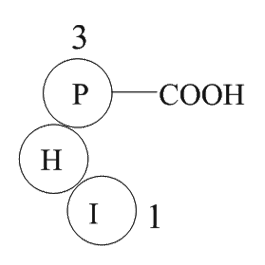
Materials and methods Results and discussion We recently found that the GlyT1 N-terminal and C-terminal sequences could be modified by phophorylation, or partially lost under pathological conditions by calcium-dependent proteolysis (Baliova and Jursky, 2005, Baliova and Jursky, 2010). While re
-
Finally the formation of a
2022-05-21
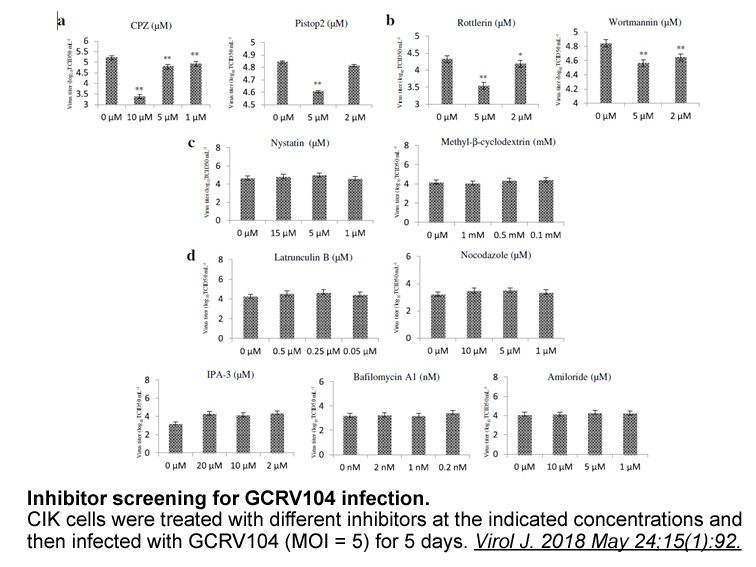
Finally, the formation of a regular network of fusion glycoproteins in their post-fusion state is not exclusive of vesiculovirus G. More or less regular networks have been also observed with other class III fusion glycoproteins such as pseudorabies gB [85] and several class II fusion glycoproteins [
-
In the present study a significant increase in liver
2022-05-21
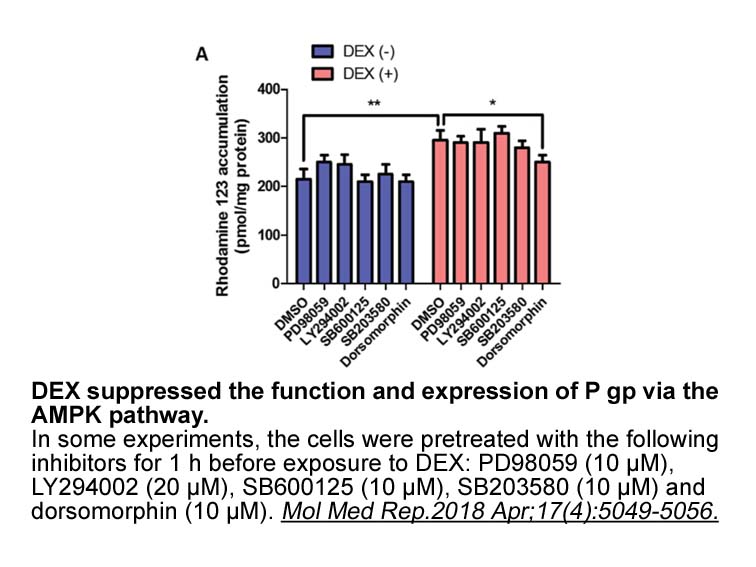
In the present study, a significant increase in liver glut4 mRNA levels as well as an increase in liver glycogen content was observed in the dogfish in response to glucose-loading, although we did not observe any changes in liver glycogen content or glut mRNA levels following insulin administration
-
br Conclusion In conclusion SHP was
2022-05-21

Conclusion In conclusion, SHP289-04 was demonstrated as a potent glucokinase activator. It could normalize the blood glucose level and lipid level in spontaneous type 2 diabetes model KKAy mice. At the same time, it ameliorated the function of islets and liver in KKAy mice. It had been proved to
-
The HH signaling has also been implicated in the regulation
2022-05-21
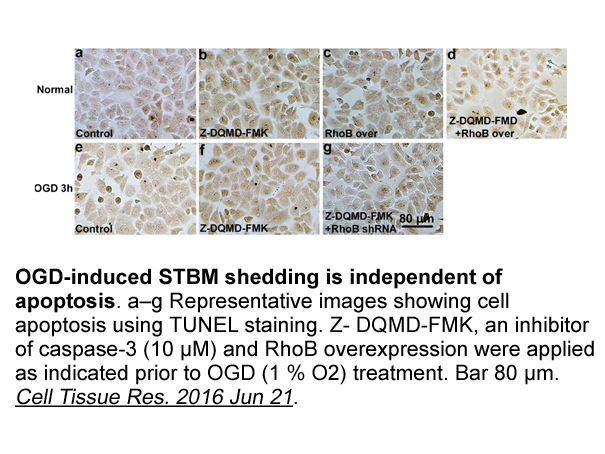
The HH signaling has also been implicated in the regulation of cancer stem nucleoside analog (CSC) by promoting their self-renewal [53]. Activated HH signaling has been identified in CSCs of many solid tumors, such as glioblastoma, breast, colon, pancreatic cancer, melanoma, and hematological malig
-
No specific inhibitor of KCC has progressed to clinical tria
2022-05-21
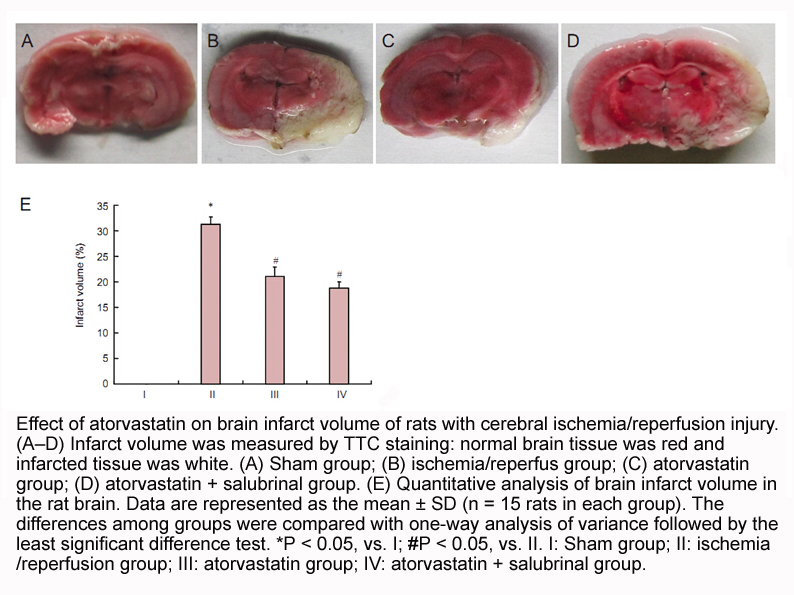
No specific inhibitor of KCC has progressed to clinical trials, however, although compounds like H74 were shown to specifically target KCC over the related Na+-K+-2Cl− cotransporter (NKCC) (Ellory et al., 1990). This molecule, or its related analogues, represent compounds of promise. Simple Mg suppl
-
Introduction Initially postulated to represent the main sour
2022-05-21
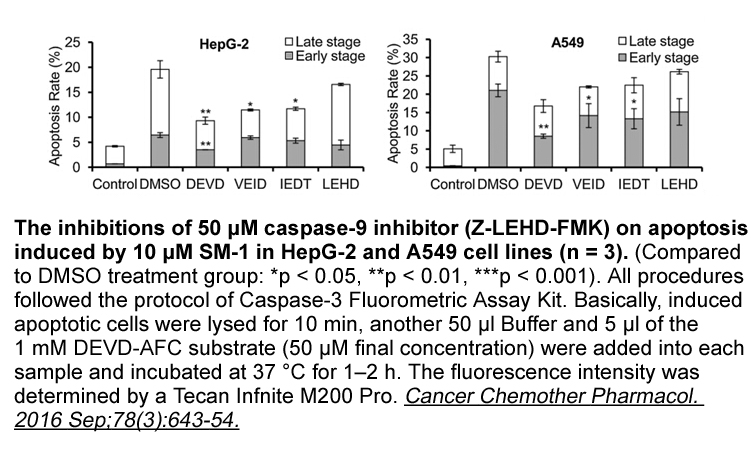
Introduction Initially postulated to represent the main source of ATP production in eukaryotic cells, mitochondria are recently recognized to perform manifold essential functions beyond energy production, impacting most areas of cell biology and medicine [1]. Mitochondrial metabolism is both the ba
-
In conclusion our results showed that FFAR can
2022-05-21

In conclusion, our results showed that FFAR1 can mediate the effect of PIO in attenuating β-cell lipoapoptosis through anti-oxidative stress, which may be related to the activation of the PLCγ-ERK1/2-PPARγ pathway. Our study helps not only to distinguish the role played by FFAR1 in lipotoxicity, but
-
Interestingly the subcellular localization of
2022-05-20
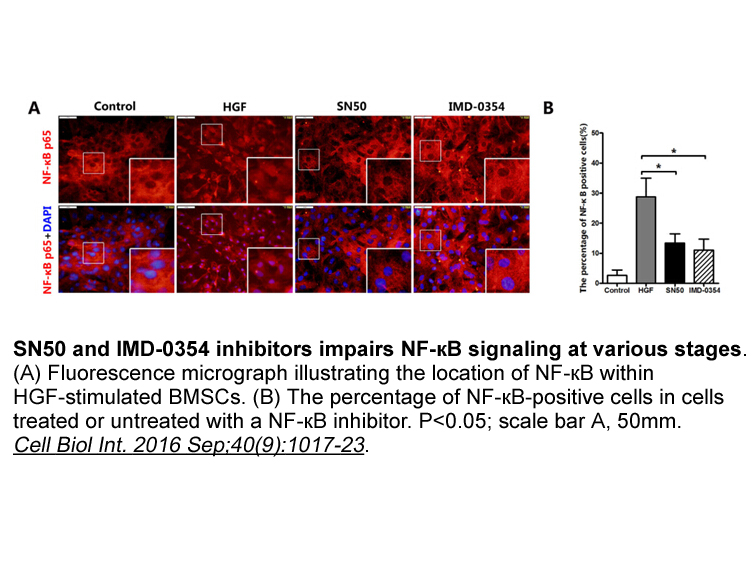
Interestingly, the subcellular localization of FBPase in hepatocytes and proximal tubule rq 1 reveals that FBPase is also able to translocate to the nucleus in these cell types. The nuclear localization of muscle-FBPase was recently reported [35]. This data corroborate our results on the ability of
-
Mammals and birds are sensitive
2022-05-20
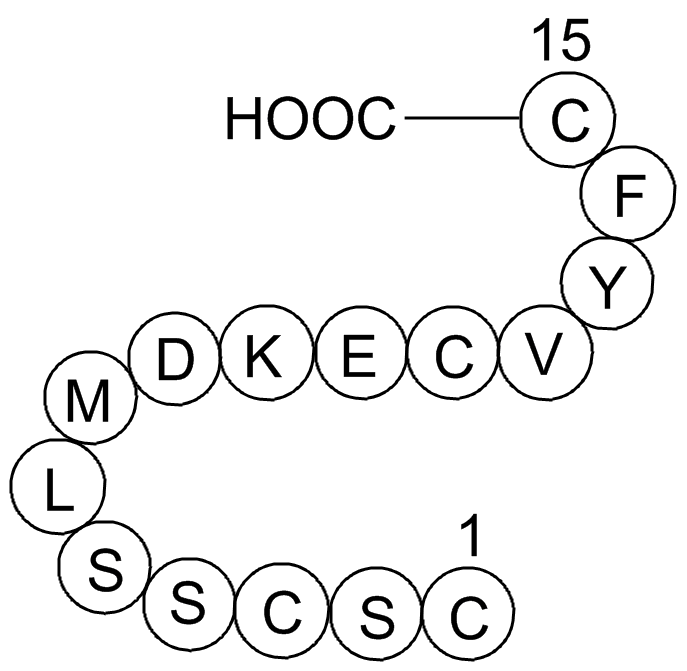
Mammals and birds are sensitive either to hypo or hyper glycemia. In contrary some frogs when freezing/thawing experience very high glycemia (Storey and Storey, 1986). Nevertheless when the effect of temperature on Fru-2,6P2 concentration was investigated, the constant glucose level in frogs kept at
-
However T DM and associated hyperglycemia can adversely affe
2022-05-20

However, T1DM and associated hyperglycemia can adversely affect the structure and function of the heart in several mechanisms including inhibiting the anabolic effect of insulin due to its deficiency, generation of higher levels of ROS and induction of lipid peroxidation, and subsequent activation o
17021 records 487/1135 page Previous Next First page 上5页 486487488489490 下5页 Last page